Leyton House Clearance: Recycling and Sustainability
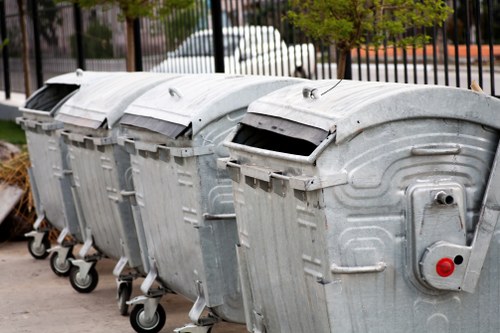 At Leyton House Clearance we commit to an eco-friendly waste disposal area approach that benefits households, the local borough and the wider environment. Our sustainable rubbish area strategy is designed around reuse, repair and responsible disposal, combining practical clearing services with measurable environmental goals and local collaboration. We work to make every clearance in Leyton, Waltham Forest and nearby boroughs a chance to divert materials from landfill and support community reuse.
We set a clear recycling percentage target for our operations: a baseline goal of achieving and maintaining a 65% recycling rate across all house clearances by 2028, rising incrementally thereafter. That target reflects the ambition of modern urban clearance services and aligns with local councils’ recycling ambitions. By measuring materials diverted—paper, card, metals, wood, textiles, WEEE (electricals) and bulky items—we track progress and report internally on composition, weight and destination.
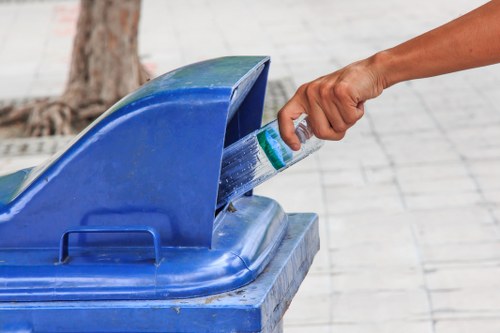 Our methods are tailored to local conditions and borough-level policies: we follow the boroughs’ approach to waste separation, supporting separate food waste collections where applicable and sorting mixed recycling to meet municipal specifications. We champion proper segregation onsite so materials go to the right municipal or commercial stream, reducing contamination and maximising recovery.
Low-Carbon Fleet, Route Efficiency and Sustainable Rubbish Area Design
We operate a fleet of low-carbon vans and vehicles to lower emissions linked to home clearances. Our transport strategy includes electric vans, plug-in hybrids and, where suitable, biofuel-compatible vehicles. Vehicles are fitted with telematics and route optimisation software to minimise mileage, and we use smaller cargo bikes for tight central-London last-mile jobs when possible. These choices support a low-carbon logistics model for Leyton clearance work.
On-site we establish a clearly marked sustainable rubbish area: separated bays for reusable furniture, recyclable materials, electricals and hazardous small items. That controlled layout speeds up sorting for transfer and donation, reduces cross-contamination and ensures compliance with transfer station acceptance criteria. A compact but visible sorting area also encourages client confidence that their belongings are being handled responsibly.
Key practices include:
- Onsite segregation of paper, card, glass, plastics and metals
- Dedicated containment for WEEE and batteries
- Secure and weatherproof staging for items destined for charitable reuse
Local Transfer Stations and Partnerships with Charities
 To ensure materials are processed properly we work with local transfer stations and municipal facilities in East and North London. Where appropriate we make regular deliveries to nearby municipal transfer depots and accredited facilities, and we coordinate with regional sites such as Edmonton EcoPark and other authorised municipal processing points to funnel recyclables and recoverables into the correct streams. These partners accept mixed loads, sorted recyclables and construction-type waste from house clearances.
Charity partnerships are central to our reuse-first ethos. We collaborate with local and national charities to ensure reusable items find new homes: organisations we support accept furniture, appliances and clothing fit for reuse. Examples include community reuse centres and registered charities that provide social benefit through furniture redistribution, training and affordable household goods. When items are unsuitable for reuse, we prioritise recycling pathways.
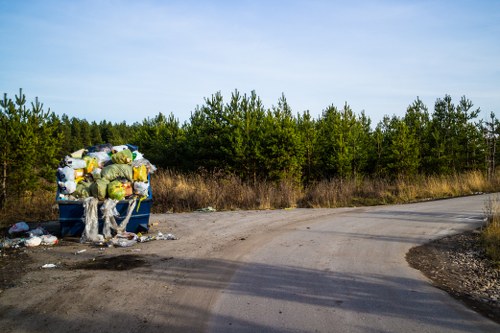 Our charity and reuse network focuses on:
- Furniture redistribution with community partners
- Donation of working appliances to registered charities
- Textile reuse schemes and clothing banks
 Monitoring and continuous improvement are part of our service model: we audit each clearance, record diversion rates and adjust processes to meet our recycling percentage target. In practice this means more items diverted for reuse, higher capture rates for recyclables and fewer trips to landfill transfer stations. We publish internal performance summaries and use the data to invest in equipment and training that supports the sustainable rubbish area concept.
We also engage with local borough policies and community programmes: working knowledge of the Waltham Forest and neighbouring boroughs’ recycling calendars and waste separation rules helps our crews match municipal sorting standards and reduce contamination. This local alignment ensures that materials our teams deliver to transfer stations are accepted and reprocessed rather than rejected.
By combining a clear recycling percentage target, partnerships with charities, use of low-carbon vans and consistent use of municipal transfer stations, our Leyton house clearance service aims to set a new standard for practical, responsible and community-focused clearances. We keep sustainability at the centre of every job—making household clearances an opportunity to support reuse, reduce carbon and strengthen local circular economy networks.